When most women hear the word core and core strength, they immediately think of abs.
But in midlife, your core is about far more than appearance.
Your glutes, back, obliques, hips, and deep stabilizing muscles are all part of your core. Together, they create the foundation that supports your posture, balance, strength, and confidence — especially as your body changes through perimenopause and menopause.
If you want to move well, feel strong, and stay capable for life, core strength is no longer optional.
What Your Core Really Is (and Why It Matters Now)
Your core is the central support system of your body. It stabilizes your spine and pelvis and connects your upper and lower body so movement feels controlled instead of chaotic.
In midlife, hormonal changes can affect:
Muscle mass
Joint stability
Bone density
Balance and coordination
A strong core helps counteract these shifts by:
Supporting posture
Reducing joint stress
Improving balance and fall prevention
Making everyday movement feel easier
This isn’t about training harder.
It’s about training smarter.
Why Core Strength Is Essential in Midlife
1. Core Strength Helps Prevent Injury
As estrogen levels decline, connective tissue and muscle recovery can change. This makes proper alignment and stability more important than ever.
Your core’s job is to keep your body stacked and supported. When it’s weak or fatigued:
Form breaks down
Other muscles compensate
Stress shifts to joints, hips, and lower back
A strong core helps protect you — whether you’re lifting weights, walking on uneven ground, surfing, hiking, or simply carrying groceries.
2. A Strong Core Improves Movement Efficiency
In midlife, energy matters.
A weak or unstable core leads to unnecessary movement — side-to-side sway, poor posture, and inefficient mechanics. All of this costs energy and increases fatigue.
A strong core:
Keeps you upright and aligned
Reduces wasted motion
Helps you move with less effort
The result?
You feel stronger, steadier, and less tired doing the same activities you’ve always done.
3. Core Strength Improves Balance and Stability
Balance naturally changes as we age — but it doesn’t have to decline.
A strong core supports:
Single-leg stability
Coordination
Reaction time
Confidence in movement
Whether you’re walking the beach, stepping off a curb, training in the gym, or moving through daily life, your core plays a major role in keeping you steady and safe.
Does Everyday Movement Strengthen the Core?
Daily movement activates the core — but activation alone doesn’t build strength.
That’s why intentional core training becomes so important in midlife. Just a few focused sessions each week can dramatically improve how your body feels and functions.
Aim for 3–4 short core sessions per week.
Consistency matters more than intensity.
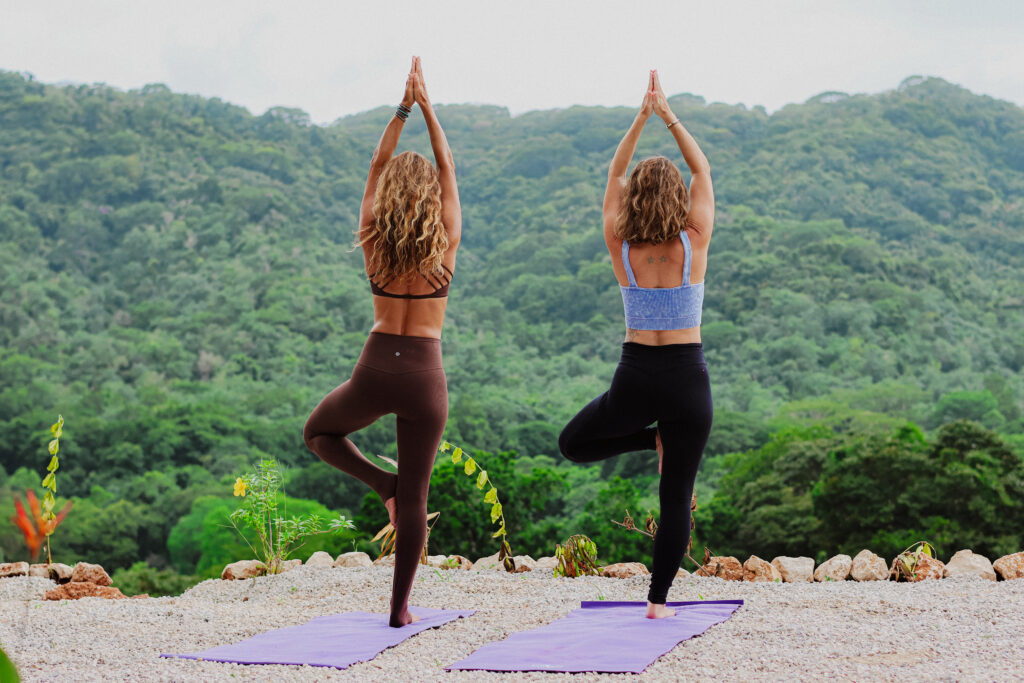
Smart Core Exercises for Midlife Women
Forget endless crunches. Effective core training in midlife focuses on stability, control, and full-body integration.
Glute Bridge Raises With/or Without Weights
Strengthens glutes, hips, and core.
Lie on your back with heels close to your glutes
Lift hips without arching your lower back
Engage glutes and core
Pause briefly at the top
3–4 sets of 15–20 reps

Dead Bug Exercise
Excellent for deep core strength and coordination.
Lie on your back with arms and legs raised
Lower opposite arm and leg while keeping your lower back on the floor
Move slowly and with control
Plank (Modified or Full)
Builds full-body strength and stability.
Forearms under shoulders
Neutral spine
Engage glutes and core
Start with knees down if needed and progress gradually.
Hold 20–60 seconds with good form
Hanging Knee Raises (Optional / Advanced)
For women who already have a strength base.
Hang from a bar
Limit swinging
Lift knees using your core
Lower with control
Why Core Training Supports Metabolism in Midlife
Core training supports:
Lean muscle mass
Better posture and movement quality
Improved strength training performance
All of which play a role in metabolic health during perimenopause and menopause.
This isn’t about shrinking your body.
It’s about supporting it.
The Takeaway
Core strength in midlife is about:
Stability
Confidence
Injury prevention
Longevity
It’s the foundation that allows you to keep doing what you love — and feel good doing it.
Train your core not to look a certain way, but to live well.
Want to learn more about my 1:1 Coaching to work on the core BEYOND sit ups? Click HERE to learn more!