Strength Training in Midlife: Why Building Muscle Transforms Your Body and Identity
Most women enter midlife thinking they need to shrink.
Fewer calories. More cardio. Smaller jeans. Quieter voice. Lower expectations.
But midlife is not a season for shrinking.
It’s a season for building.
And the most powerful way to rebuild your body — and your identity — is through strength training in midlife.
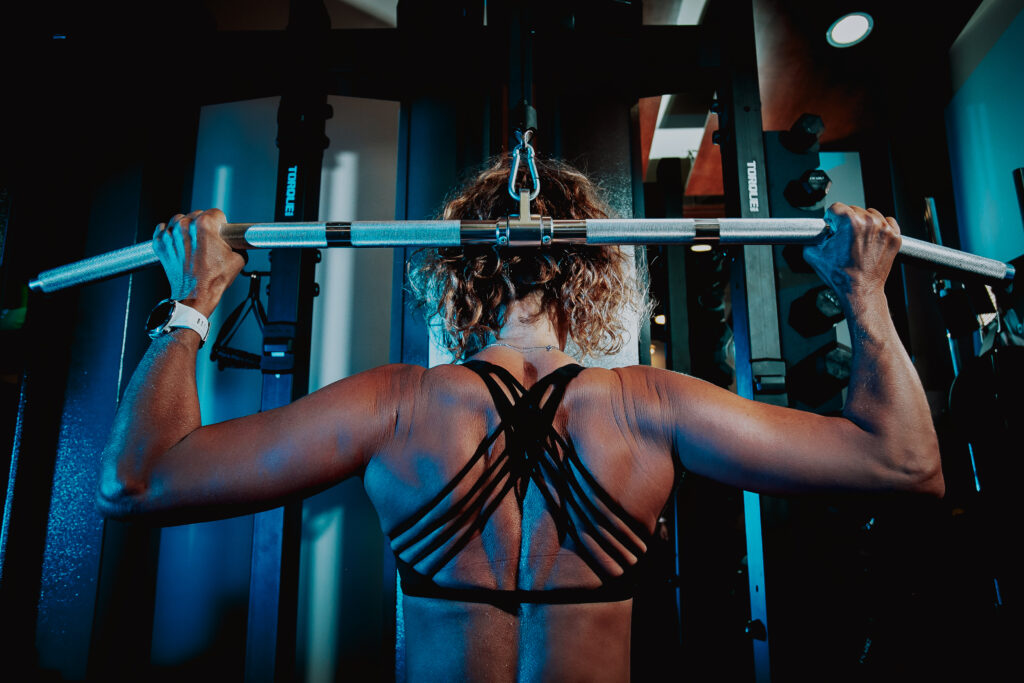
Strength Training in Midlife!
The Moment I Realized Shrinking Wasn’t Working
There was a season when I was doing “everything right.”
I was disciplined. I was active. I knew how to push — decades of endurance racing taught me that.
But my body wasn’t responding the same way anymore.
I wasn’t broken. I wasn’t lazy. I wasn’t undisciplined.
I was in midlife.
And midlife doesn’t respond to more punishment.
It responds to stimulus.
When I shifted from burning calories to building muscle, something deeper shifted too.
My body changed — yes.
But so did the way I stood in a room. The way I spoke. The way I tolerated nonsense.
Strength training in midlife became more than fitness.
It became identity work.
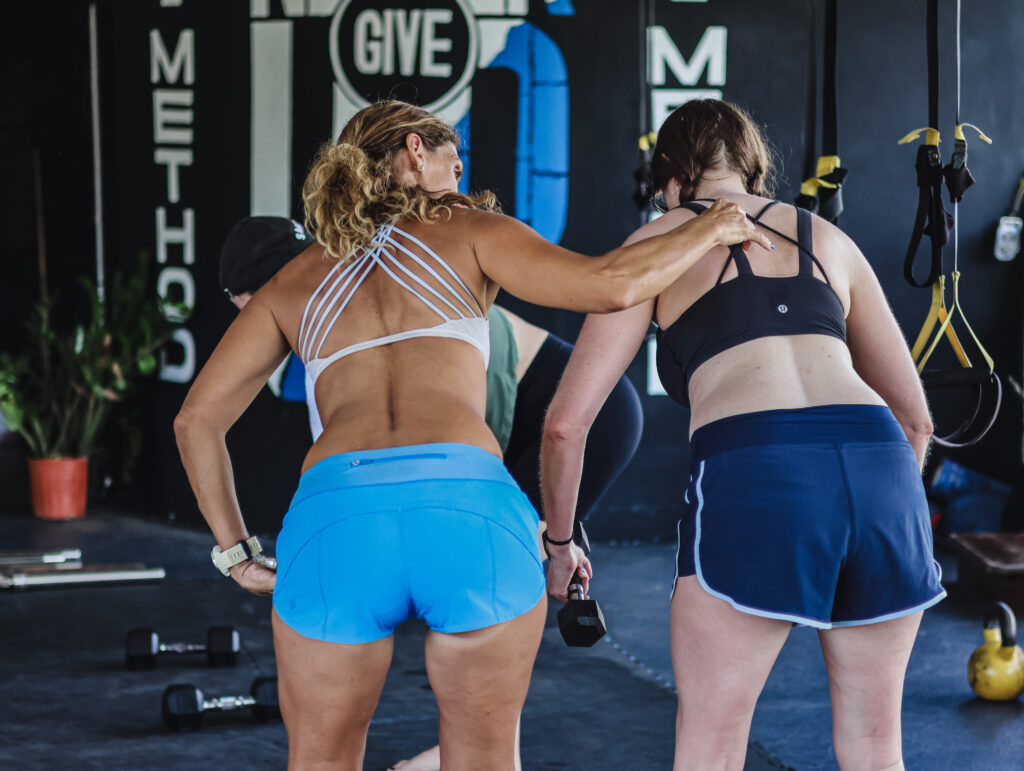
Focusing on Strength Training Post 40's
What’s Actually Happening to Your Body After 40
As women move through their 40s and into menopause, physiology changes.
Estrogen declines. Muscle mass begins to decrease (sarcopenia accelerates after 40). Bone density drops. Insulin sensitivity shifts. Cortisol becomes more reactive to stress.
Midlife strength training is not about exhaustion.
It’s about resilience.
Swinging Kettlebells at Midlife!
Building Muscle After 40 Changes More Than Your Body
Here’s what most articles won’t tell you.
When women begin lifting weights consistently, something psychological shifts.
Posture changes.
Confidence rises.
Boundaries strengthen.
You don’t just build glutes.
You build standards.
You don’t just strengthen hamstrings.
You strengthen your voice.
You stop apologizing for taking up space.
You stop trying to be smaller — physically or emotionally.
Strength training in midlife becomes symbolic.
It’s physical proof that growth is still available.
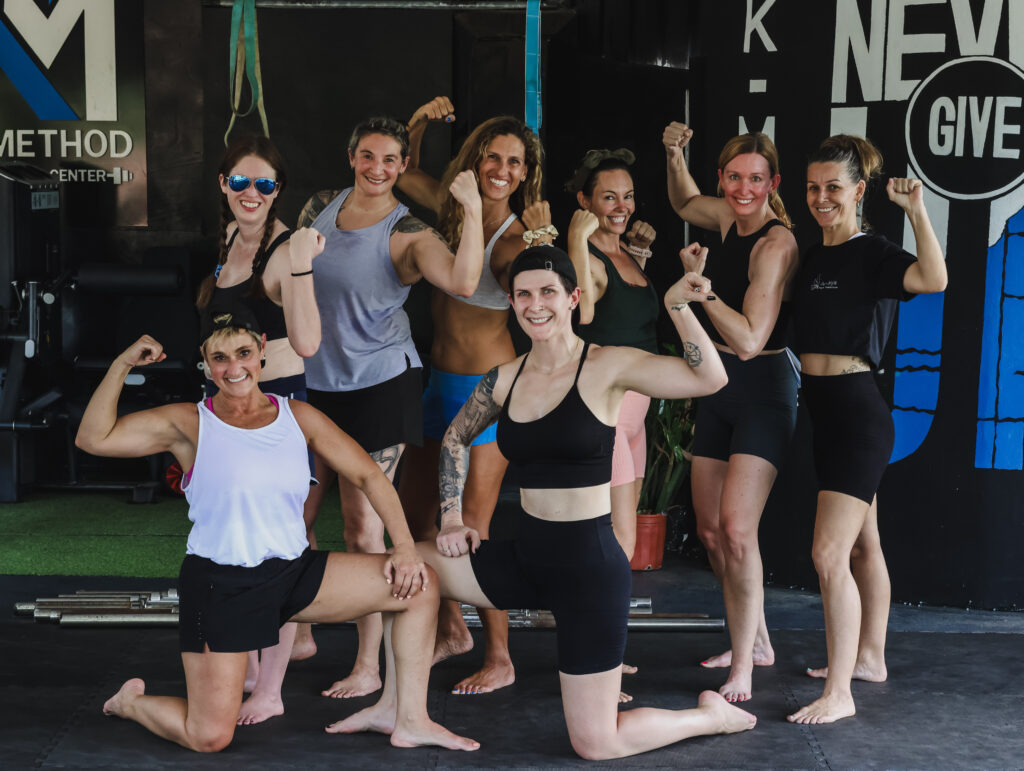
Staying Strong in our 40's!
Midlife Is an Identity Transition — Not Just a Hormonal One
Many women come to me saying:
“I feel unsettled.” “I don’t recognize myself.” “I don’t want the same things anymore.”
Yes, hormones are shifting.
But so is identity.
Midlife is often when women outgrow roles, relationships, and expectations they once built their lives around.
Building muscle gives you something steady while everything else is evolving.
It reminds you:
“I am capable.” “I am strong.” “I am not done.”
Strength becomes an anchor.
Bulgarian Split Squats are Coaches Favorites!
The Long-Term Benefits of Lifting Weights in Your 40s and 50s
Research consistently shows that strength training in midlife:
Improves bone density
Reduces risk of osteoporosis
Enhances insulin sensitivity
Supports healthy body composition
Improves cognitive function
Reduces symptoms of anxiety and depression
Increases longevity and functional independence
But the benefit I see most often?
Women trust themselves again.
Seated Rows are CRUCIAL in Midlife!
Frequently Asked Questions About Strength Training in Midlife
Is it too late to build muscle after 50?
No. Women can build muscle well into their 50s, 60s, and beyond with progressive resistance training and proper nutrition. Check out this article about Strength Training Over 40!
How many days per week should women over 40 lift?
Three to four strength sessions per week is ideal for most women in midlife.
Does strength training help menopause weight gain?
Yes. By preserving and building muscle, strength training improves metabolic rate and body composition, which can help counter menopause-related fat gain.
Can I lose fat and build muscle at the same time?
Yes — especially in midlife when training and nutrition are aligned properly. This is called body recomposition.
Are You Ready to Stop Shrinking?
If You’re Ready to Stop Shrinking
If you’re tired of:
Dieting harder
Adding more cardio
Feeling frustrated with your body
Questioning your identity
It may be time to build instead of burn.
Strength training in midlife is not about chasing skinny.
It’s about building strong.
And strong changes everything.
If you’re ready to build muscle and rebuild your identity at the same time, explore my 1:1 coaching or the Rise Strong community. This is where we do the work — physically, emotionally, metabolically.